A new line is moving through the private capital industry, and it is worth paying attention. Bain & Company, in its 2026 Global Private Equity Report, summarized the math of the new era in five words: “12 is the new 5.”
The phrase refers to earnings growth. In the last cycle, a company growing EBITDA at roughly 5% a year could still produce attractive private equity returns with help from leverage and multiple expansion. Today, that same return profile may require EBITDA growth closer to 10% to 12% annually. The financial engineering that powered two decades of industry wealth has, by Bain’s measure, more than doubled the operational burden it places on portfolio companies.
This may be the most important shift in private equity in a generation, and it has a clear winner. Operators.
I have spent more than twenty-five years building Encore around a model that the rest of the industry is only now beginning to embrace. We started in the late 1990s with a simple conviction: own the businesses we invest in, run them ourselves, and learn each one from the ground up before scaling capital around it. That choice looked unfashionable for most of the last two decades, when the dominant business model in private capital was a financial one. Identify a mispriced asset, structure a transaction around it, apply leverage, ride the tailwinds. Operations were a downstream consideration, often outsourced to portfolio company management while the deal team moved on to the next transaction. A rising tide, as the saying goes, lifts all boats.
But the tide is not rising the way it once did, and when it is low, the operations have to be that much tighter. It is clear at this point, that model is exhausted and the numbers are explicit. Revenue growth now accounts for 71 percent of the value created in private equity exits, up from 64 percent in 2023. Multiple expansion, the magic ingredient of the last cycle, has flatlined. Distributions to investors ran at roughly 6 percent of industry assets last year, less than half the long-run average. Limited partners are pulling back from managers who cannot demonstrate operational mastery.
The largest names in private capital understand this. Brookfield wrote in its 2026 outlook that “the age of financial engineering is over, and the defining go-forward narrative is operational excellence.” Apollo, KKR, and Blackstone have each, over the past two years, made highly public investments in operating capability: senior industry executives hired into operating partner roles, dedicated value creation teams stood up, sector specialization deepened.
The challenge with this pivot, when you make it from the financial side, is that operating cultures cannot be bolted on. They have to be grown. A firm that has spent twenty years optimizing for transaction velocity does not, on a Monday morning, become a firm that thinks in five-year operating arcs. That has been our advantage at Encore. We built the operating company first, then organized the capital around what we had learned. When markets are not providing tailwinds, the work of running the business has to be that much tighter. There is no other lever to pull.
The clearest illustration is our work in restaurants. Over more than a decade, we built what became the largest Five Guys franchise in the United States, eventually operating more than a hundred locations across Texas and the South. The growth came not from financial engineering but from the daily work of running restaurants: training, staffing, real estate selection, supply chain, and, during the pandemic, opening the chain’s first ghost kitchen in North America while competitors were closing stores.
In 2022, we exited the portfolio in four tranches over five months, at a valuation that reflected what had been built operationally, and we redeployed the proceeds into another emerging operating platform. That is the kind of value created when investment expertise sits inside the operating company rather than above it.
This should become the economically dominant approach. The firms generating top-quartile returns in 2025 were those who had institutionalized operating playbooks years earlier, when it was unfashionable to do so. The gap between top-quartile and median performance has widened to its largest level in a decade.
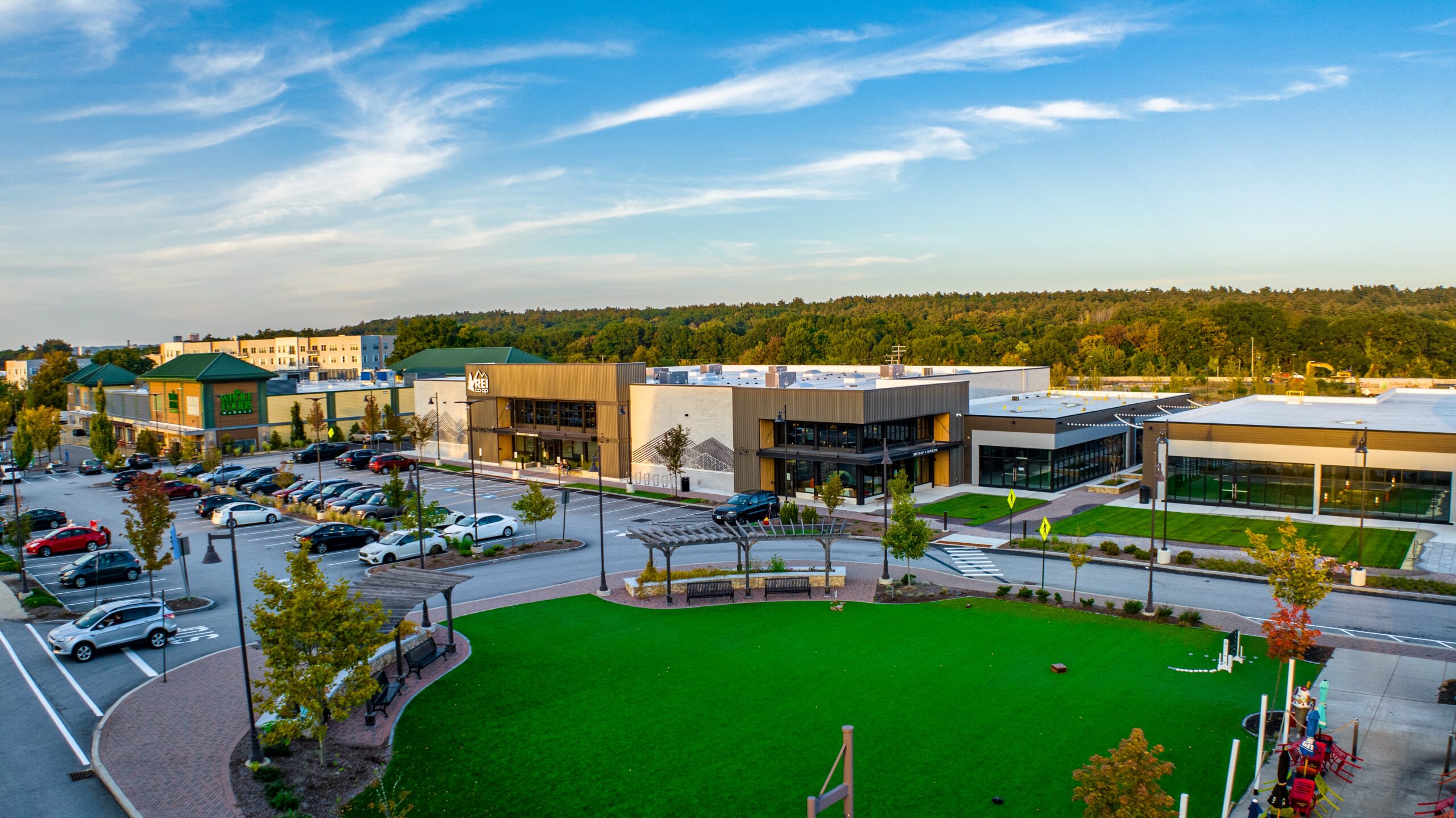
The implication reaches beyond private equity itself. The American economy is built largely of the kinds of businesses that institutional capital has historically considered too small, too operationally intensive, or too geographically scattered to bother with. The shopping centers in suburban Dallas Fort Worth. The hotels off the interstate in Atlanta. The multifamily units in Orlando and Fort Myers. The everyday infrastructure of a country whose center of gravity is shifting south and inland. These are the businesses we have spent our careers learning how to operate, and they are the ones the rest of the industry is now learning to value.
These are not asset classes. They are workplaces, in towns, with employees who shop where they work and send their kids to local schools. When capital that understands operations flows into them, jobs are created in places that need them, and returns are earned in ways that compound rather than extract.
This is, in a sense, what private capital was supposed to be in the first place. Patient, hands-on, partnered with operators, attentive to the actual mechanics of how value is built. The industry drifted away from that model during the long bull market because it did not have to be disciplined. It does now. And the operators, who have been here the whole time, are about to find that the rest of the industry has come to meet them.