Category : Insights

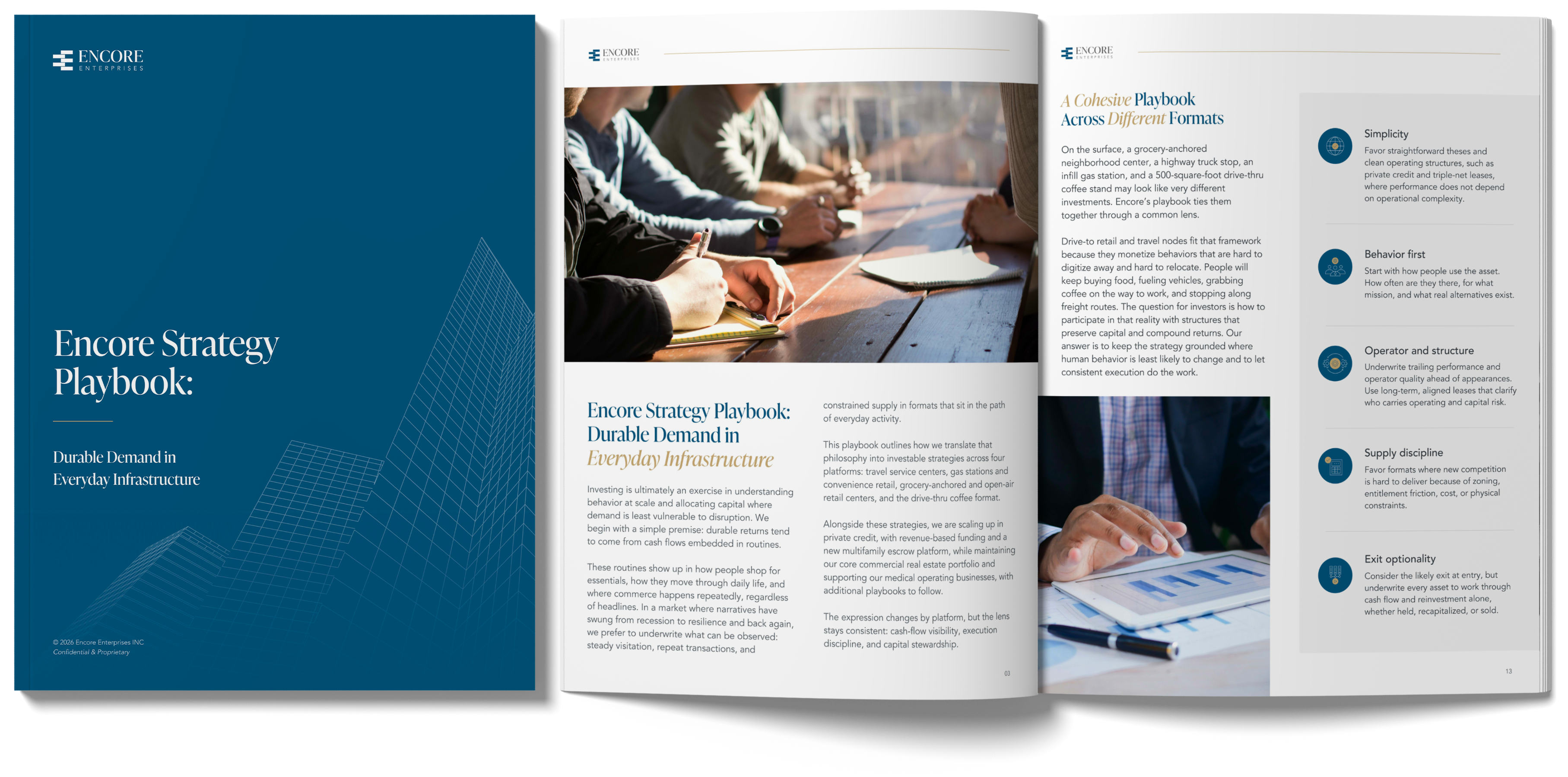
Encore’s Strategy Playbook: Durable Demand in Everyday Infrastructure

Investing is ultimately an exercise in understanding behavior at scale and allocating capital where demand is least vulnerable to disruption. We begin with a simple premise: durable returns tend to come from cash flows embedded in routines.

These routines show up in how people show for essentials, how they move through daily life, and where commerce happens repeatedly, regardless of headlines. In a market where narratives have swung from recession to resilience and back again, we prefer to underwrite what can be observed: steady visitation, repeat transactions, and constrained supply in formats that sit in the path of everyday activity.

This playbook outlines how we translate that philosophy into investable strategies across four platforms: travel service centers, gas stations and convenience retail, grocery-anchored and open-air retail centers, and the drive-thru coffee format.

Alongside these strategies, we are scaling up in private credit, with revenue-based funding and a new multifamily escrow platform, while maintaining our core commercial real estate portfolio and supporting our medical operating businesses, with additional playbooks to follow.

The expression changes by platform, but the lens stays consistent: cash-flow visibility, execution discipline, and capital stewardship.

Encore Investment Framework

This framework is built around durable demand and underwriting realism rather than narrative appeal. Encore deploys capital from a position of operating maturity, with a strategy designed to generate meaningful growth without relying on aggressive expansion or accepting modest, yield-driven outcomes.

We focus on assets and operating platforms where value creation is driven by repeatable economic activity and disciplined execution. Growth is derived from operating performance, capital efficiency, and pricing discipline, not from long-duration capital defensiveness or speculative scale.

Accordingly, we are intentionally positioned closer to the core end of the risk spectrum than in prior opportunistic periods. We are not pursuing hyper-growth strategies that depend on aggressive leverage, rapid expansion, or perfect macro conditions. At the same time, we are not allocating capital to low-volatility assets designed primarily to preserve value over decades.

Cash-on-cash performance is a gating requirement, and capital is allocated where current income and forward growth are both supported by the underlying business. Our objective is to generate durable, risk-adjusted growth that compounds through execution. Three principles govern the approach:

  • Operational reality over conventional optics. Our strategy is not to chase AAA real estate for its own sake. We respect the durability of prime locations, but we underwrite the return profile, not the headline. Even “Main and Main” can produce thin yields if the business underneath underperforms. We prioritize lease structure and operator execution, and we focus on formats where value creation is driven by measurable performance, not assumptions.
  • Supply discipline as a return driver. In retail, our bias is toward formats where new supply is structurally constrained and value creation is driven by leasing execution, not redevelopment risk. This is reinforced by observed rent resets in supply-constrained markets.
  • Return-driver diversification, not asset labels. We construct the strategy to balance yield, rent growth, and operating upside without depending on a single macro outcome, a single operator, or a single exit window.

Strategy Implementation by Asset Type

Our investment framework is expressed through a set of four strategies designed to capture durable demand in different ways. Each platform serves a distinct role, balancing current income, growth potential, tax efficiency, and liquidity, while remaining anchored to the same underwriting discipline.

Travel service centers and truck stops reflect an emphasis on cash flow visibility and scale-driven economics. Operating at the intersection of real estate and enterprise operations, performance is shaped less by traditional location metrics and more by operator execution, throughput, and long-term lease structure.

These assets routinely serve hundreds of trucks per day—often 300 to 500 or more—under national fleet fueling agreements that generate materially higher diesel margins, frequently approaching $0.50 per gallon. Revenue is diversified across fuel, food, retail, and driver services, while federal driving-hour regulations and contract-based fueling relationships create predictable stopping behavior.

Underwriting Snapshot

  • Long-duration master triple-net leases (≈20-year initial terms)
  • Underwritten to trailing diesel volumes and operator execution
  • Fleet contracts and regulated stopping behavior support demand
  • Operator quality prioritized over real estate optics

We participate through master lease structures that shift operating responsibility to experienced and best-in-class operators and tenants and guarantee rent regardless of sub-tenant performance, reinforcing income durability. Individual assets commonly trade in the $35–$40 million range and are positioned for exit through portfolio-level transactions rather than individual asset sales. The result is a yield-oriented platform designed to produce stable income with limited capital volatility, supported by typical hold periods of three to five years and targeted dispositions while approximately 15 years of lease term remain to preserve downstream buyer demand.

Gas stations and convenience stores apply similar principles in a more distributed form. Profitability is driven by repetition and convenience, with inside-the-store sales accounting for the majority of economic value rather than fuel margins, which are often thin on a per-gallon basis. In a market that is highly fragmented, many stores are still owned by small operators, creating opportunities to buy well-located assets that never reach institutional deal flow. We focus on existing locations with demonstrated operating history, typically secured under true triple net leases with 20 year initial terms, where tenants are responsible for taxes, insurance, maintenance, and capital expenditures.

Underwriting Snapshot

  • Existing locations only with verifiable sales history
  • Profit driven by inside-the-store sales, not fuel margins
  • Preference for infill sites with barriers to new competition
  • Typical 3–5 year hold, exiting with meaningful lease term remaining

These structures shift operational and capital risk away from ownership while creating high visibility into cash flow. Assets are frequently located in infill or overlooked neighborhoods where competition is constrained by physical or zoning limitations and where the store functions as a de facto grocery and retail outlet for the surrounding community. Value creation is pragmatic rather than transformational. It comes from a sourcing and execution edge: local partners who uncover motivated sellers, paired with proven regional operators who can standardize performance. We then drive outcomes through operator alignment, modest refinements, lease stabilization, and disciplined leverage, generally targeting approximately 65% loan-to-value on larger assets to support double-digit cash-on-cash returns. Exits are typically oriented toward individual asset sales, where remaining lease term, predictable income, and tax efficiency support durable buyer demand.

Grocery-anchored and open-air retail centers serve as the portfolio’s stabilizing force. These assets benefit from necessity-based demand and consistent visitation, supported by a structural supply environment that has favored landlords as new retail construction has remained historically constrained. This approach emphasizes well-located centers anchored by grocery stores or other essential tenants with strong renewal probability, where leasing execution and rent growth—rather than redevelopment risk—drive returns over time.

Underwriting prioritizes immediate cash yield and tenant durability, with recent acquisitions and renewals achieving material rent increases as legacy leases roll, in some cases moving rents from the high teens into the low 30s per square foot or higher.

Underwriting Snapshot

  • Strong necessity-based anchors driving consistent traffic
  • Immediate cash yield required; marquee brands alone are insufficient
  • Value creation via leasing execution and rent resets
  • Focus on markets with limited new retail supply

Capital discipline remains central; we have passed on large, high-quality grocery-anchored portfolios when projected returns fell below target thresholds, typically around 10% cash-on-cash, even when anchored by premier national brands. This approach ensures that brand quality enhances returns rather than substitutes for them. Grocery-anchored assets provide flexibility and optionality, allowing properties to be held for stable income, selectively recapitalized, or monetized as leasing objectives are achieved and liquidity presents itself.

The 7 Brew drive-thru coffee platform represents a more growth-oriented extension of the same framework, combining operating execution with disciplined real estate selection. The model is intentionally simple at the unit level—each stand operates from an approximately 500-square-foot prefabricated building with no food preparation, minimal equipment, and a double drive-thru format engineered for speed and throughput. National average unit volumes of roughly $2.4–$2.5 million materially exceed traditional fast-casual benchmarks and reflect a business built around habitual purchasing rather than discretionary dining.

Underwriting Snapshot

  • Minimum traffic and trade-area transaction density thresholds
  • High-retail-density corridors; weekend traffic matters
  • Clustered site strategy to reinforce convenience and repeat visits
  • Permitting and development timelines explicitly underwritten

Success in this strategy depends on precision: high-traffic trade areas, strong retail adjacency, and efficient permitting and development timelines. We underwrite 7 Brew as a habit-based business, deliberately clustering locations within a two-mile radius to reinforce repeat behavior and capture demand embedded in daily commuter patterns.

Site selection emphasizes retail performance over rooftops alone, with target criteria including daily traffic counts of approximately 20,000 vehicles or more—often exceeding 50,000 at high-performing locations—household incomes at or above market averages, and placement within trade areas generating at least five million annual transactions and approximately $150 million in retail sales within roughly two miles. Co-tenancy with overperforming grocery stores, Costco or Walmart, and high-volume QSRs serves as a proxy for traffic quality.

While operationally more involved than our lease-driven strategies, the underlying thesis remains consistent: durable consumer behavior, limited supply of high-quality sites, repeatable unit-level economics, and a defined path to scale. New stores are underwritten with a two- to three-year ramp to stabilization, with the long-term objective of assembling a 25–30 unit portfolio capable of producing exit outcomes comparable to much larger legacy restaurant portfolios, transacting at double-digit EBITDA multiples.

These platforms reflect our belief that durability is not confined to a single format. By applying a consistent lens across varied expressions of real assets and operating businesses, we are able to diversify return drivers while maintaining a cohesive approach to risk, execution, and long-term capital stewardship.

Market & Macro Backdrop: Conditions That Reward Selectivity

Entering 2026, the environment is shifting from pure constraint to selective opportunity. The Federal Reserve’s December 2025 implementation note set the federal funds target range at 3.50%–3.75%, reflecting a move toward easier policy after the higher-rate period of 2024–2025.[i] For real assets, the significance is not “rates will save the day,” but that price discovery and deal velocity can improve when financing becomes incrementally more workable.

At the same time, the consumer has remained more stable than sentiment would suggest. The U.S. Census Bureau’s advance report put October 2025 retail and food services sales at $732.6B, up 3.5% year-over-year, suggesting continued baseline demand even with mixed headlines.[ii]

For retail real estate specifically, the setup remains defined by tight fundamentals and limited new supply. Costar reported a 4.3% national retail vacancy rate at year’s end, underscoring stability even amid closures and bankruptcies and highlighting under-construction volume that has fallen to its lowest level since 2021.[iii] These conditions tend to favor owners who can execute leasing and push rents in well-located centers—exactly where Encore concentrates.

Liquidity is also improving. Altus Group reported $150.6B of U.S. CRE transaction value in Q3 2025, up 23.7% quarter-over-quarter and 25.1% year-over-year—an important signal that the market is moving again, though not uniformly.[iv] In practice, that means the gap between “financeable, underwriteable cash flow” and “speculative story” is widening, rewarding disciplined strategies with visible income and clear execution plans.

A final tailwind is tax policy. Multiple third-party summaries of the 2025 tax law, commonly referred to as the “One Big Beautiful Bill Act,” note that 100% bonus depreciation was restored and made permanent for qualifying property, such as gas stations, placed in service after January 19, 2025.[v] For operator-heavy real assets, this can meaningfully affect after-tax cash flow—but Encore treats it as a secondary enhancer, not the core thesis.

Encore’s Moves Over the Past 12 Months

Across these verticals, we have used the past year to sharpen the link between strategy and behavior:

Travel nodes. In December 2025, we acquired four truck stops as a single portfolio, with an aggregate value of ​approximately $130 million dollars. The decision was to gain meaningful enterprise exposure through a master-tenant model, instead of slowly accumulating dozens of smaller convenience store assets. In parallel, we acquired five convenience stores in the back half of 2025, with an aggregate value of approximately eleven million dollars. These locations were chosen for trailing performance, operator quality, clear value-add paths, and, in many cases, operator guarantees that further secure rent streams.

Essential retail. In May 2025, we acquired grocery-anchored retail centers in Chicago and Rhode Island, growing the entire commercial portfolio to 26 properties totaling approximately 1.41 million square feet. Across the portfolio, several key assets moved from construction-heavy phases into strong leasing environments, with tenants outperforming sales expectations on the back of heavy foot traffic. Against this backdrop, we passed on the previously mentioned $160 million national grocery portfolio, despite its premier anchors, reinforcing that return thresholds, typically around 10% cash-on-cash, remain firm.

7 Brew. On the development side, we treated 2025 as a year to prove the operating model and refine the pipeline. Four stands came online in Utah, with eight more scheduled for 2026, working toward a development agreement target of 28 total stands by the end of 2027. The team used real timeline experience to justify the decision to bring entitlement and permitting capabilities closer to the core of the platform and to divest our Arizona development rights.

Taken together, these moves illustrate the broader pattern. Capital goes where behavior is durable, where supply is naturally constrained, and where we have the operational insight to underwrite both the current income and the exit.

A Cohesive Playbook Across Different Formats

On the surface, a grocery-anchored neighborhood center, a highway truck stop, an infill gas station, and a 500-square-foot drive-thru coffee stand may look like very different investments. Encore’s playbook ties them together through a common lens.

  • Simplicity.  Favor straightforward theses and clean operating structures, such as private credit and triple-net leases, where performance does not depend on operational complexity.
  • Behavior first. Start with how people use the asset: how often they show up, for what mission, and what real substitutes exist.
  • Operator and structure. Underwrite trailing performance and operator quality ahead of appearances. Use long-term, aligned leases that clearly allocate operating and capital risk.
  • Supply discipline. Favor formats where new competition is hard to deliver because of zoning, entitlement friction, cost, or physical constraints.
  • Exit optionality. Consider the likely exit at entry, but underwrite every asset to work through cash flow and reinvestment alone, whether held, recapitalized, or sold.

Drive-to retail and travel nodes fit that framework because they monetize behaviors that are hard to digitize away and hard to relocate. People will keep buying food, fueling vehicles, grabbing coffee on the way to work, and stopping along freight routes. The question for investors is how to participate in that reality with structures that preserve capital and compound returns. Our answer is to keep the strategy grounded where human behavior is least likely to change and to let consistent execution do the work.


[i] Federal Reserve. Implementation Note. Issued December 10, 2025. https://www.federalreserve.gov/newsevents/pressreleases/monetary20251210a1.htm.

[ii] U.S. Census Bureau, Economic Indicators Division, Retail Indicator Branch. Advance Monthly Sales for Retail and Food Services, October 2025. Published December 16, 2025. https://www2.census.gov/retail/releases/historical/marts/adv2510.pdf.

[iii] CoStar. United States Retail National Report. Published January 9, 2026

[iv] Bassett, J. Altus Group Releases Q3 2025 U.S. Investment & Transactions Quarterly Report. Altus Group. https://www.altusgroup.com/press-releases/altus-group-releases-q3-2025-us-investment-transactions-quarterly-report/.

[v] Grant Thornton. OBBBA Offers New Ways to Accelerate Depreciation. Published August 4, 2025. https://www.grantthornton.com/insights/alerts/tax/2025/insights/obbba-offers-new-ways-to-accelerate-depreciation.
Navigating Real Estate When Proformas Meet Reality

In 2024, approximately $929 billion in commercial real estate debt came due in the most challenging financing environment in a decade. Interest costs climbed, insurance premiums surged, and exit strategies shifted dramatically. Sponsors who could pivot swiftly preserved value and those who couldn’t struggled.

Markets can turn quickly, and when they do, proformas are usually the first casualty. Predicting future performance with spreadsheets is standard in commercial real estate and an essential part of analyzing prospective deals. Informed by intense market research, it also provides critical guardrails for asset management post close. However, when extenuating circumstances hit and market dynamics no longer match the model’s underlying assumptions sponsors need to be savvy enough to know what levers to pull next. For high-net-worth investors and wealth management professionals, recognizing a sponsor’s skill in navigating market volatility is more crucial than ever.

“For over 10 years, it was typical to assume a 4% to 6% annual increase in insurance costs. Those stable and predictable assumptions went out the window post-COVID,” explained Charlie Keels, President of Encore Multifamily. He explains, “Underwriting isn’t static. Successful multifamily investment requires constant recalibration. It’s not about being exactly right from the start; it’s about being highly adaptable and experienced enough to know when to be patient and when to get creative.”

Keels faced precisely this situation with their Encore Montrose project, a multifamily development in Houston’s urban core constructed before COVID-19 reshaped tenant preferences and market demand. Originally positioned for young professionals desiring urban live-work-play environments, Encore Montrose faced slower rent growth than anticipated due to work-from-anywhere permission shifting demand toward suburban areas.

With Encore’s strong balance sheet, the project was able to hold steady until Keels eyed an opportunity with an affordable housing tax structure. The underwriting penciled out and the decision reduced property tax liabilities, which increased net operating income significantly. Keels emphasized, “It’s about persistence, flexibility, and knowing when and how to pivot to drive investor value.”

Some of the most difficult levers in real estate are found in the fixed costs, particularly insurance and property taxes. In one Dallas–Fort Worth multifamily project, Keels and his team focused on insurance, a line item often seen as immovable, and cut costs by nearly 50 percent. By aggregating coverage across multiple assets and leveraging a blanket policy through a partner like Greystar, the team spread risk and secured better pricing without compromising protection. It’s a clear reminder that returns aren’t solely driven by revenue and that great execution lives in the line items.

This underscores a critical truth about underwriting. It’s far more strategic than transactional and sometimes less is more. Seasoned professionals like Drew Rohmer, senior underwriter at Encore Enterprises, know that the goal isn’t to model every detail but instead to zero in on what truly has the power to move the needle. As he puts it, “When a model tries to answer every question, it usually means the underwriter hasn’t figured out the right question yet.” In fact, overly complex models can be a red flag, often signaling that a sponsor lacks confidence in their instincts and is trying to back into a result with false precision.

Instead, experienced underwriters focus on thresholds: the minimum rent required to clear debt service, the cap rate sensitivity that breaks the return, the construction cost ceiling before a deal stops penciling, etc. Experienced professionals streamline their models not because they know less, but because they know exactly what matters and what doesn’t.

All of this takes time and a fair amount of mental gymnastics which many have been supplementing with artificial intelligence. Rohmer warns that while AI may be useful for speeding up surface-level research, at its core, it’s still a language learning model and not a numbers engine. That distinction is critical in underwriting, where precision matters. Rohmer found that AI can have an inherent bias to tell you what sounds right rather than what is right. In a discipline where even minor miscalculations can derail a deal or an overly rosy market analysis can mislead investors, that kind of false confidence isn’t just risky, it’s dangerous.

Yet, despite AI’s growing influence, underwriting remains intensely human. Rohmer explains, “AI can save time in researching markets and gathering comparables, but it can’t replace market intuition and relationships. Real estate isn’t just numbers; it’s experience, instincts, and decisive action.”

Encore’s strategic response at Encore Montrose further highlights this. Under normal market conditions, Encore reassesses its underwriting two to three times annually to ensure alignment with evolving fundamentals. However, for assets facing distress or material deviations from plan, Encore increases its frequency, sometimes revisiting core assumptions monthly.

As Keels notes, “You can’t overreact, but you can’t ignore realities either. If you change the plan too often, you’ll only make things worse. It takes experience to gauge timing and know when to recalibrate.” For Encore Montrose, it took two years to enact the tax advantage strategy. He adds, “That judgement—plus a strong balance sheet and the ability to effectively leverage financing structures and control costs—is what separates a good outcome from a great one.”

In real estate investing, the market rarely moves as projected. That’s not a flaw; it’s reality. For wealth managers and investors, it means weighing a sponsor’s track record of adaptability under stress as critically as initial IRR projections in decision making. Anyone can make a deal pencil, but that doesn’t make it durable. Trust is built on how an investment performs in the real world, and that has everything to do with the decision makers behind it.

Capital Calls Make Everyone Sick

Capital Calls Make Everyone Sick

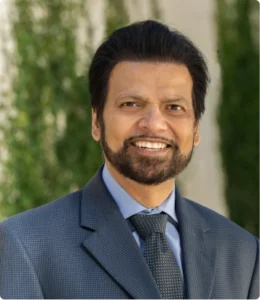
Dr. Bharat Sangani-img

As a physician and real estate investor, I’ve found that the problem-solving strategies of medicine—diagnosis, treatment planning, and patient care—translate well to commercial real estate. Both fields demand a deep understanding of complex systems, careful risk assessment, and a focus on long-term outcomes over short-term gains. Given the current turbulence in the market, I believe it’s only fitting to take a clinical approach. So, what’s my diagnosis of the market, and what’s the treatment plan for navigating these challenges?

What’s my Diagnosis on Capital Calls: Lifeline or Liability?
As someone who’s been in the trenches of the commercial real estate sector for decades, I’ve seen firsthand how quickly market sentiment can shift. But the current environment has been particularly challenging, with a perfect storm of historically high interest rates and loan maturities—aftereffects of the pandemic’s easy money.

From a global standpoint, $1.5 trillion in commercial real estate loans will need refinancing within the next 18 months. Within the United States, the Federal Reserve has finally begun the long-anticipated rate cuts this September. However, it’s worth keeping in mind that rates are still three times higher than the average between 2009 and 2019.[1]

What’s striking—and deeply concerning—is how many firms are responding to these pressures by passing the buck onto their investors. The buzz among industry professionals paints a picture that you won’t find in many headlines: investors are being squeezed and it’s bringing morale down.

This isn’t just an anecdotal observation. While publicly available data might be thin—these are, after all, privately held funds—the reality is that many firms are struggling to maintain their footing. Defaults are rising, and to shore up their balance sheets, many real estate sponsors are resorting to unplanned capital calls.

Overall, this may not be a significant hurdle for institutional capital, whose participants are more likely to have reserves in place to handle these requests. However, these demands are placing significant stress on high-net-worth investors, who are already navigating a complex economic environment themselves.

Stop the Bleeding
As chairman of Encore Enterprises, a private equity firm and commercial real estate sponsor, our Board has made the strategic decision to avoid issuing capital calls. We’re not immune to the pressures facing the industry, but we believe that placing additional financial burdens on our investors should be undertaken only as a last resort. One which we carefully avoided for more than 25 years by focusing on disciplined management of our corporate balance sheet and maintaining a diversified portfolio at the corporate level.

This approach is particularly important in today’s market, where contradictions abound. There’s a record amount of dry powder—capital ready and waiting to be invested. This is money that could, in theory, be used to snap up distressed assets, take advantage of lower property valuations, and capitalize on the eventual market recovery, if only buyers and sellers could close the yawning gap between them. It’s a paradox that’s slowing down the deployment of this capital, creating a kind of gridlock in the market.

Other firms may appear to be stuck in short-term thinking, but this often stems from the need to address immediate financing, or capital expenditure demands due to high interest expenses or unmet debt covenants. An urgency to shore up their assets’ financial futures can lead firms to issue unplanned capital calls or new layers in the capital stack that take priority over existing investments, which risks alienating investors. While it’s easy to label this as shortsighted, for some sponsors, it may be the only option to prevent a total loss of assets. However, long-term trust and relationships remain paramount, and balancing the need for capital with a thoughtful plan is critical to maintaining that trust.

Treatment for Long-term Health
My long-term advice to both investors and sponsors is to remain patient and strategic, especially in times of market uncertainty. This is not a time for short-term fixes or reactive moves. Instead, it’s a time to make calculated decisions that may not pay off immediately but are designed to preserve and grow capital over time.

While admittedly not a financial luxury all sponsors can afford, lengthening hold periods may be a smart strategy to maintain income and preserve investors’ capital while waiting for valuations to recover, even if it feels difficult in the moment. For investors eyeing fresh opportunities, focus on sectors like multifamily housing and grocery-anchored retail, and avoid sectors that are struggling to adapt to the new realities of the market, like office real estate.

The market is in a state of flux, and patience will be essential as investment return timelines shift. At Encore, we believe this patience will pay off. By strategically avoiding capital calls, we’re preserving the trust we’ve built with our investors over the years. In addition, we’re solidifying our financial position and maintaining transparent communication with our investor network, so we’re ready to capitalize on the opportunities that will inevitably emerge as the market stabilizes.

Prescribed Patience
What’s clear is many firms may be in an unsustainable position, the pressure on investors is real, and there’s a deal-flow bottleneck that has so far prevented the market from moving forward. At some point, hopefully soon, the gears will start turning again—the dry powder will be deployed, and capital will flow back into the market. When that happens, you want to be aligned with sponsors who are in a position to act decisively and understand that investors are partners, not just sources of capital.

In the meantime, stay the course. It’s a challenging time, no doubt, but it’s also a time of opportunity to partner with sponsors who are willing to think differently, act responsibly, and stay true to their investors.

[1] Greg Friedman, “The Fed’s Rate Cuts Won’t Save Commercial Real Estate,” Barron’s, Sept. 20, 2024. https://www.barrons.com/articles/fed-rate-cuts-wont-save-commercial-real-estate-3c13babd.

Hospitality Acquisition in Florida

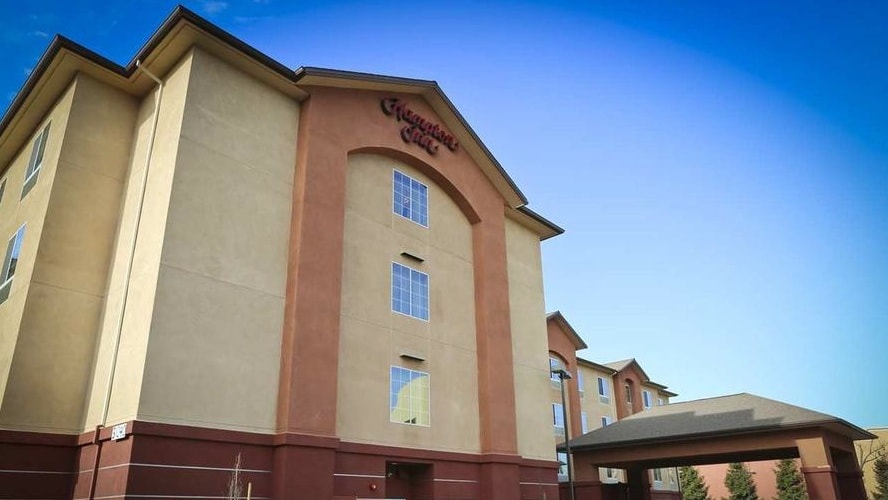
Hampton Inn, Tampa

Hospitality Acquisition in Florida

Hospitality acquisitions have the potential to be a great investment if the locations are managed correctly. Proper marketing outreach for acquisitions is obtained through strategic media placement, and the ability to always improve the location from where it began.

Hospitality Acquisitions in Tampa, Florida

Encore Hospitality highlights the Hampton Inn, located in Tampa, Florida as a great example of this. This hotel acquisition occurred in 2005, located near the Tampa International Airport, and offers many amenities for its guests.

Hospitality Acquisitions in Fort Meyers, Florida

The Best Western in Fort Meyers, Florida was a hospitality property Encore acquired in 1999. This property’s location is what made it an attractive investment choice. Offering easy access to the waterfront and close proximity to downtown Fort Meyers made this hotel acquisition desirable. We brought our leadership team in addressing the strengths and weakness of this hotel and managed the property for 8 years. When we felt the time was right and the value of the business had increased from our management efforts, we sold the location in 2007.

The Encore Hospitality Team

Our Hospitality Management Team is ranked in Hotel Business’s Top 50 hotel Developers and Owners in the nation and the team can quickly recognize the strengths and weakness of a potential acquisition location. When acquiring a hospitality location it is important to consider all of the existing strengths such as current staff, policies and procedures and to eliminate those that pay potentially hinder success.

Utilizing these key principles along with our leadership team’s industry knowledge, we continue to strengthen the overall business model for this location including the quality of service, and customer satisfaction.

If you would like to know more about Encore Hospitality, the current investment opportunities we have or general information about our hospitality services you can contact us.

If you are considering putting your hospitality location on the market, please visit our acquisitions page.

Florida Investing | Apartments for Sale

Multi-Family Properties For Sale, Florida Investing

Apartments and Multi-Family Properties for Sale and Investor Demographics

When it comes to investment opportunities in apartments and multi-family properties in the United States, there has been a very high trending pattern of investors which consist of individuals and retirees from the state of Florida. Additionally, there has been an increasing trend of money managers who represent Floridian retirees as they look into apartment projects that are for sale as well as new development projects.

Encore Multi-Family, LLC, a subsidiary of Encore Enterprises, Inc., has always seen a large demographic of clients who are from New York and California. However, the growing trend of investors who are from Florida can be attributed to these three factors: trends, geography, and motivations.

Florida Investing Trends | Apartments for Sale

For years, individuals and money managers have known that investing in apartment and multi-family properties has become a positive trend. Additionally, Encore Multi-Family, LLC and past investors understand that any investment is a risk, with no guarantees and no past projects can reflect the outcome of future projects. To learn more about past and current projects, visit Encore Multi-Family’s portfolio.

Florida Investing Geography | Apartments for Sale

With a warm, tropical climate as well as a strong tourism industry, Florida has always been an attractive state for individuals and retirees to live in. Additionally, a growing number of baby boomers who are nearing retirement are now moving into or spending a good portion of their time in Florida. Increased investor interest coming from the state of Florida isn’t a big surprise; Florida has always been an attractive state to live and retire in.

Florida Investing Motivations | Apartments for Sale

Encore Multi-Family, LLC acquires apartment properties which are sold from all over the United States. Additionally, following rigorous guidelines has enabled Encore Multi-Family to establish a strong and respectable portfolio. Encore Multi-Family is proud to recruit great leaders and establishing an industry-proven management that will foster growth in the multi-family sector for years to come. To learn more, visit Encore Multi-Family’s management team.

Florida Investing Geography | Apartments for Sale

Increased investor interest coming from the state of Florida isn’t a big surprise. Florida has always been an attractive state to live and retire in. We also believe that an increased number of baby boomers are now retiring and moving or spending a good portion of their time in Florida.

Florida Investing Trends | Apartments for Sale

Money Managers and Individuals have collectively know for a number of years now, that investing in apartment / multi family properties has been trending investment. Encore Multi-Family, LLC and our past investors know that any investment is a risk, with no guarantees and no past projects can reflect the outcome of future projects. You can view both past and future projects in our multi-family portfolio here.

Multi-Family Properties For Sale

Multi-Family Properties For Sale

Multi-Family Properties For Sale

Investors may find that multi-family properties are attractive investment opportunities. However, there are many factors to consider when purchasing or investing in multi-family properties which are sold throughout the nation. Here at Encore Enterprises, we can assist the investor in navigating through the sales process and relieve any unpredictable hardships that may come along the way.

Multi-Family Properties For Sale | Deciding Factors

When Encore Enterprise considers purchasing a multi-family property for sale, the property is evaluated by some primary factors such as the age of the property, how well it has been maintained, current managing company, asking price, location, see if any opportunities exist to increase revenue or decrease expenses, and the ability to resale if acquired.
Encore Enterprises brings a depth of experience and knowledge to the private sector when it comes to purchasing investment properties. If all deciding factors meet our standards, we will then submit the property to our investment committee and then to our qualified investors for purchasing the location in question.

Multi-Family Properties For Sale | Making The Purchase

Once Encore Enterprises has finalized the purchase of a multi-family property, they begin the renovation process. Some examples of these renovations may include hiring the best internal employees, resolving any and all past issues with current residents, and reaching out to the local community through strategic marketing. If you or your party is interested in more information on what it takes to become a qualified investor with Encore Enterprises, please contact us.